
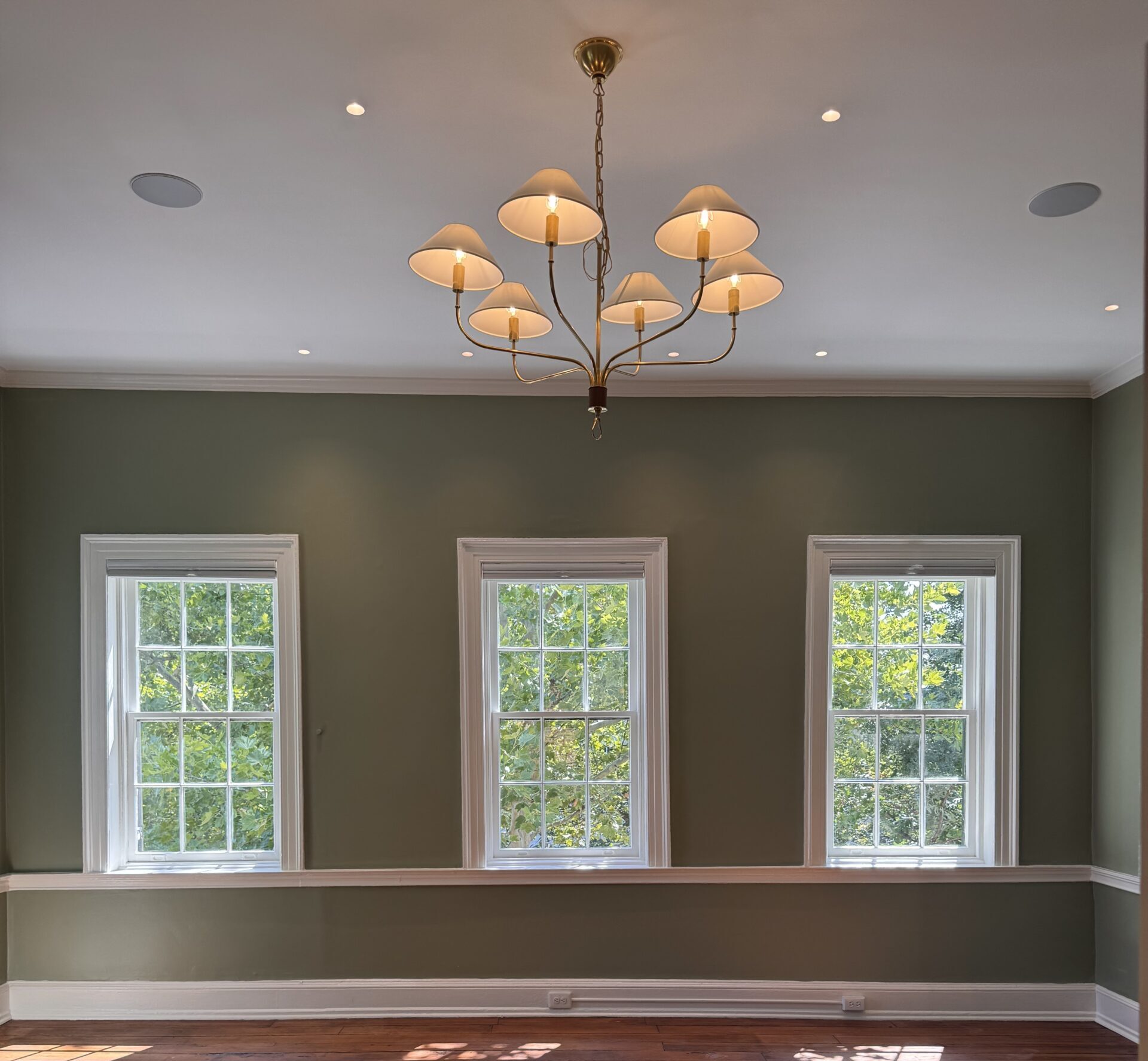
Why a Thoughtful Historic-Home Renovation Shouldn’t Look Brand-New
When you’re renovating a home that’s 60, 100, or even 150 years old, I don’t think the goal should be to make everything look brand-new.
If you walk into a century-old house and can immediately tell that every finish, fixture, and architectural detail was installed within the last five years, something has been lost along the way.
Of course, we want our homes to accommodate the way we live today. Kitchens need to function for modern families, bathrooms should be comfortable, and older layouts sometimes need to be reconsidered. But there’s a difference between thoughtfully updating a historic home and removing the very things that made it special in the first place.
For me, the most successful historic renovations feel as though the home has evolved naturally over time. Some elements may be original, others might be antiques, and still others can be completely contemporary. It’s the relationship between them that makes a home feel collected, interesting, and true to its history.
Start by Understanding What Makes the House Special
Before making decisions about what to change, I think it’s important to understand what gives an older home its character.
Sometimes those details are obvious, like original moldings, fireplaces, or beautiful old floors. Other times, they’re smaller imperfections that tell you something about the people who lived there before.
In one of our Georgetown projects, the homeowners wanted to preserve carvings in the millwork of an upstairs room. The markings had been left by the son of a prominent former owner of the house, roughly a century earlier.
Those carvings are part of the home’s history. They’re something you could never recreate with new materials, and removing them would mean losing a small but meaningful connection to the people who once lived there.
I think details like these are worth paying attention to during a renovation. Not every imperfection needs to be corrected, and not every surface needs to be made perfectly smooth or uniform.
There’s value in allowing a house to show some of its age.
Choose Materials That Will Look Better With Time
One of the things I consider when selecting materials for an older home is how they’ll age.
I don’t necessarily want every fixture to remain shiny and look exactly as it did on installation day. In fact, sometimes a little patina is exactly what a room needs.
In our Georgetown renovation, we selected quite a bit of unlacquered brass for the kitchen and bathrooms. Unlike lacquered finishes that are intended to maintain a consistent appearance, unlacquered brass naturally changes with use and exposure over time.
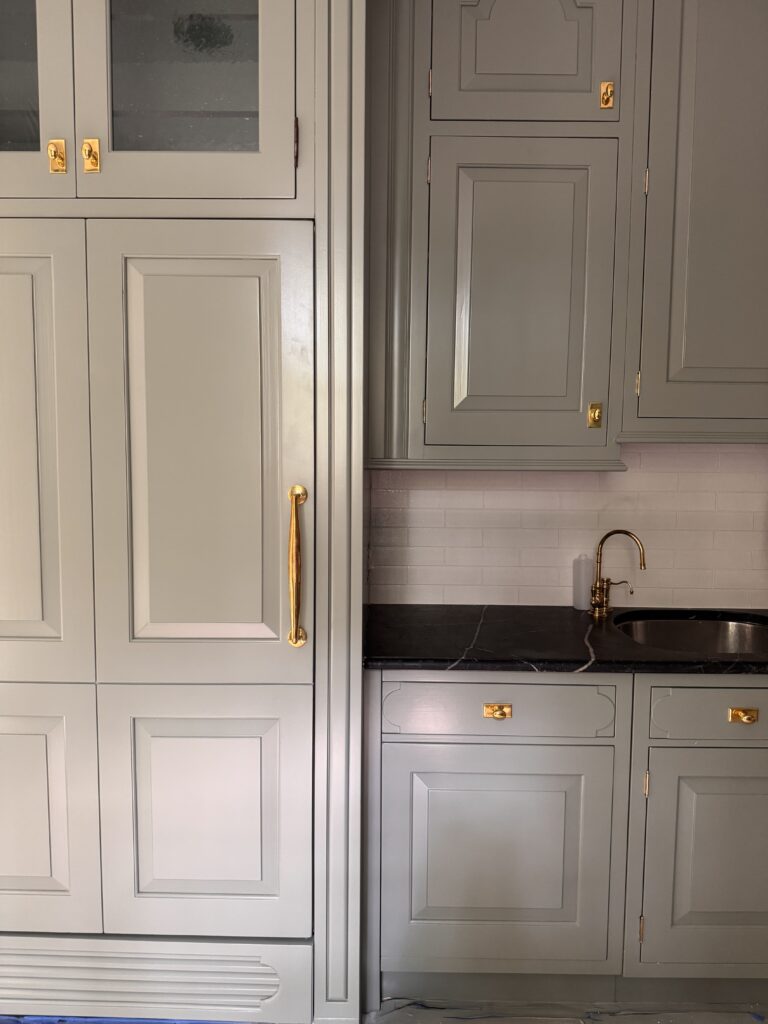
I love that quality in a historic home. The finish develops character as the family lives with it, rather than looking permanently new.
Material selection also has a tremendous impact on whether a renovation feels appropriate to the architecture.
For example, I’m generally not a fan of installing luxury vinyl plank flooring throughout the main living areas of an older home. Even when a product is designed to resemble wood, it doesn’t necessarily have the same character or presence as the real material. Of course there are times and places where hardwood is not an option, such as in a basement.
I feel similarly about some of the more recognizable finish combinations we’ve seen everywhere in recent years. An all-white bathroom with black plumbing fixtures, for instance, can immediately make a renovation feel tied to a particular moment in design.
That doesn’t mean black fixtures or contemporary finishes are always inappropriate. But I do think it’s worth considering whether a selection belongs in the house or whether it simply happens to be popular right now.
Mixing finishes can also help a home feel as though it has been furnished and updated over time, rather than everything being selected from the same collection.
Not Every Wall Needs to Come Down
One of the first questions that often comes up during a renovation is whether to open up the floor plan.
And there are certainly situations where removing walls makes sense. Older homes weren’t always designed around the way families live today, and sometimes changing the layout can make a tremendous difference in how the house functions.
But I don’t think opening everything up should automatically be the goal.
I was recently talking with a friend who is planning a kitchen renovation. She was considering whether to remove the wall between her kitchen and dining room, and we ended up discussing the value of keeping the dining room as its own space.
There’s something really nice about having a dedicated dining room. It gives the space a sense of purpose, and sometimes the separation between rooms is part of what makes an older house feel right.
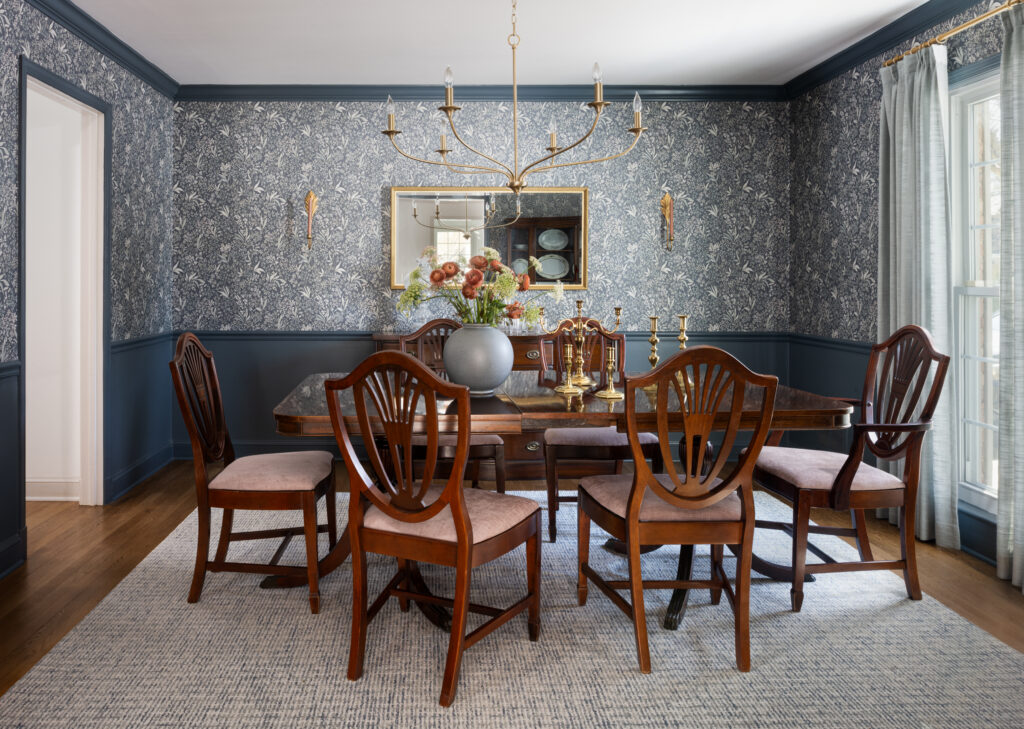
I also think people sometimes overlook the practical implications of removing walls.
When you create one enormous open space, you lose places to put things. You have fewer walls for furniture, fewer opportunities for storage, and fewer places to display art.
These are things I think about frequently when working through renovation plans. A beautiful room still needs to function, and the ability to arrange furniture comfortably is a significant part of that.
Sometimes keeping a wall makes a room more useful, not less.
And sometimes smaller rooms are simply meant to be smaller. Their proportions and the way they relate to the rest of the house are part of the architecture.
The decision to remove a wall should be made in the context of the entire home, rather than assuming that bigger and more open is always better.
Balance Historic Details With Contemporary Design
One of the things I enjoy most about designing historic homes is finding the right balance between old and new.
I don’t believe every fixture, furnishing, or wallpaper needs to look as though it came from the same period as the house. In fact, when everything is historically inspired, the interiors can start to feel a little too much like a museum.
The balance is something I consider from the very beginning of a project.
If I know a room will have a lot of antique furniture, I might introduce more contemporary lighting or a modern wallpaper to keep the space feeling fresh.
On the other hand, if the homeowners prefer more contemporary furnishings, that might be an opportunity to incorporate a historically inspired wallpaper or a more traditional light fixture.
I also love the idea of taking an antique piece, like a wingback chair, and reupholstering it in a fun, modern print. You still have the beautiful shape and craftsmanship of the older piece, but it feels relevant to the room today.
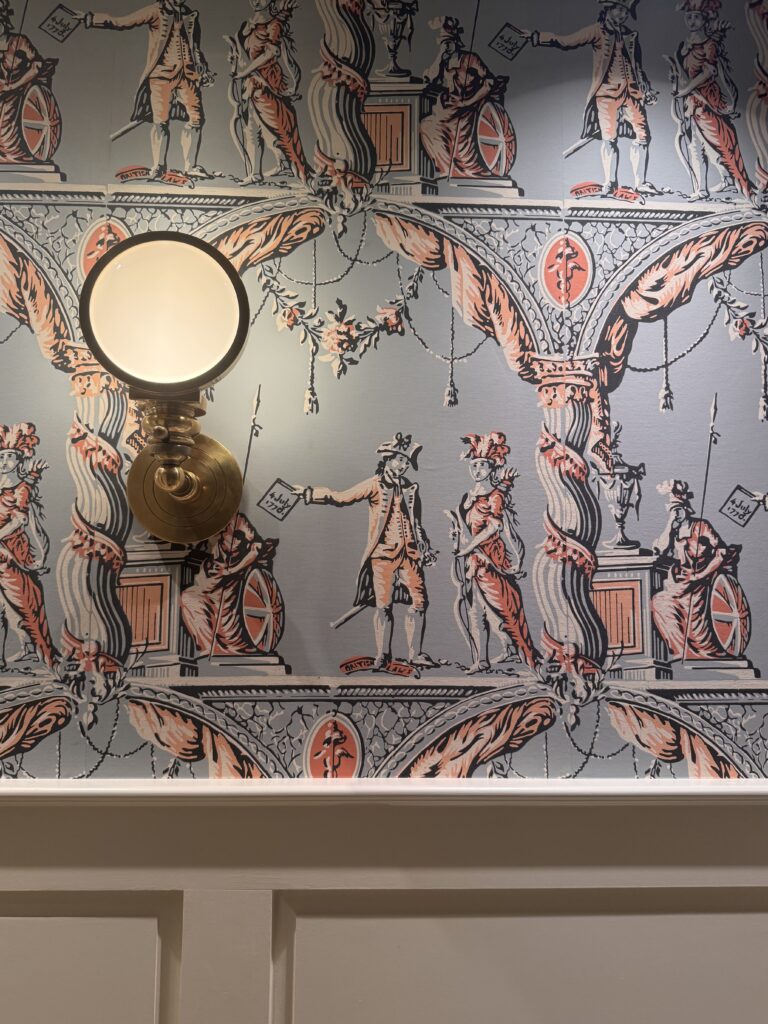
The important thing is to think about the room as a whole.
If every individual selection is made without considering what else will be in the space, it’s easy to end up with a room that feels too heavily traditional or, conversely, one where the new elements overwhelm the architecture.
I like to have a clear vision for how the finished room will feel before making those individual decisions. That allows us to introduce contrast where it’s needed and create a balance that feels natural.
New Work Doesn’t Have to Pretend It’s Old
Lighting is a good example of how I approach this balance.
In our Georgetown project, we selected glass bell jar lanterns for the hallways. They’re a style of fixture that feels appropriate to the architecture and references what might historically have been found in a home like that.
But we didn’t take that same approach in every room. In other spaces, we incorporated lighting that was more modern or contemporary. Those fixtures brought a different element into the interiors and helped prevent the house from feeling overly tied to one period.
We took a slightly different approach in our Wesley Heights project, a mid-century townhouse where we wanted to introduce a more timeless, traditional feel. We selected beautiful Visual Comfort pendants for the kitchen, along with other classic light fixtures throughout the home. While these selections leaned more traditional, they weren’t intended to look like antiques or replicate fixtures from a particular period. They simply felt right for the spaces we were creating.
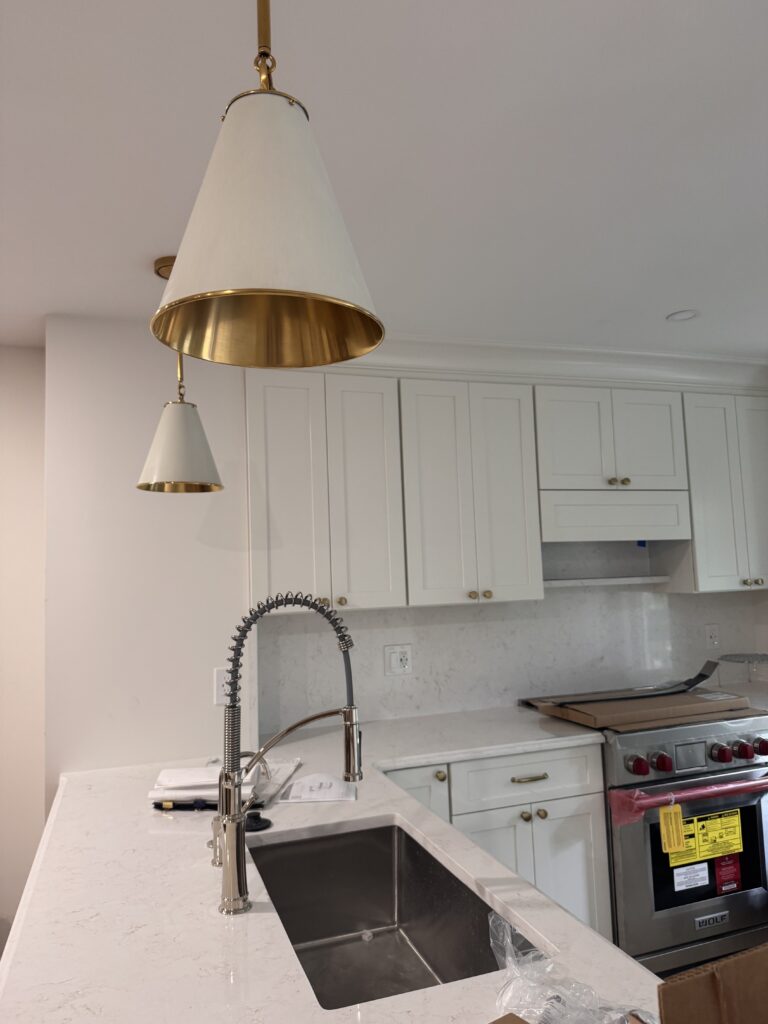
I think that’s an important distinction when renovating an older home.
You can respect the original architecture without trying to reproduce an entire historic interior. And just because a home was built during a particular decade doesn’t mean every new selection needs to reflect that period.
Some of the most interesting interiors are those where you can appreciate the contrast between different eras. An antique piece of furniture can look wonderful beneath a contemporary light fixture. A modern print can bring new life to a traditional chair. And a beautifully preserved architectural detail can coexist with an updated kitchen designed for the way a family lives today.
The goal is to consider all of those elements together so that the finished home feels collected over time, rather than designed around one particular period.
A Historic Home Should Continue to Evolve
Ultimately, I think renovating a historic home is about understanding what deserves to remain and where there’s room for something new.
I don’t want a house to feel frozen in time. The people living there now should be able to make it their own, and their needs and personalities should be reflected in the design.
At the same time, I don’t think every generation needs to erase what came before.
Those old carvings in the Georgetown millwork are a good reminder of that. They’re a small part of the home’s story, preserved alongside new materials, updated spaces, and furnishings selected for the family living there today.
A thoughtful renovation allows all of those things to exist together.
And when the balance is right, the finished home feels fresh and comfortable without losing the character that made it worth preserving in the first place.
Considering a Renovation of Your Historic Home?
At Walsh Bourke Interiors, we specialize in thoughtful renovations of historic and character-rich homes throughout the Washington, DC area. Our full-service approach considers the home’s architecture, the way you live, and the many details involved in bringing old and new together.
If you’re considering a renovation and want to preserve what makes your home special while preparing it for the years ahead, I’d love to hear about your plans.
Leave a Reply

Walsh Bourke Interiors Signature Look Guide
A guide to our signature design rules to help you implement your plan, master the details, and style your home with professional confidence.


Be the first to comment